

Do escalator hand rails have a specific direction of movement? This is a question that might seem trivial at first glance, but it holds significant importance in the realm of escalator functionality and safety. As a supplier of Escalator Hand Rail, I've delved deep into the mechanics and design principles behind these seemingly simple yet crucial components.
The Mechanics of Escalator Hand Rail Movement
To understand whether escalator hand rails have a specific direction of movement, we first need to grasp how escalators work. An escalator is essentially a moving staircase that consists of a continuous loop of steps driven by a motor. The hand rail, on the other hand, is a flexible belt that runs parallel to the steps, providing passengers with a stable surface to hold onto.
The movement of the hand rail is directly linked to the movement of the steps. A series of pulleys and drive systems ensure that the hand rail moves at the same speed as the steps. This synchronization is crucial for passenger safety, as it prevents any sudden jolts or discrepancies in movement that could cause passengers to lose their balance.
In most cases, the hand rail moves in the same direction as the steps. When the escalator is moving upwards, the hand rail also moves upwards, and when the escalator is moving downwards, the hand rail moves downwards. This consistency in direction ensures that passengers can easily hold onto the hand rail and move with the escalator without any confusion.
The Significance of Specific Direction
The specific direction of movement of the escalator hand rail serves several important purposes. Firstly, it provides a natural and intuitive way for passengers to use the escalator. When people step onto an escalator, they instinctively reach for the hand rail and expect it to move in the same direction as the steps. This familiarity reduces the learning curve and makes the escalator more user-friendly, especially for first-time users or those with limited mobility.
Secondly, the specific direction of movement enhances passenger safety. By moving in the same direction as the steps, the hand rail helps to guide passengers along the escalator and provides a stable support system. This is particularly important when the escalator is crowded or when passengers are carrying heavy objects. The hand rail acts as a safety net, preventing passengers from falling or losing their balance due to sudden movements or external forces.
Furthermore, the specific direction of movement of the hand rail also plays a role in the overall efficiency of the escalator. When the hand rail moves in sync with the steps, it reduces the friction and wear on the components, prolonging the lifespan of the escalator and reducing maintenance costs. This is why escalator manufacturers and suppliers pay close attention to the design and installation of the hand rail to ensure that it moves smoothly and consistently in the correct direction.
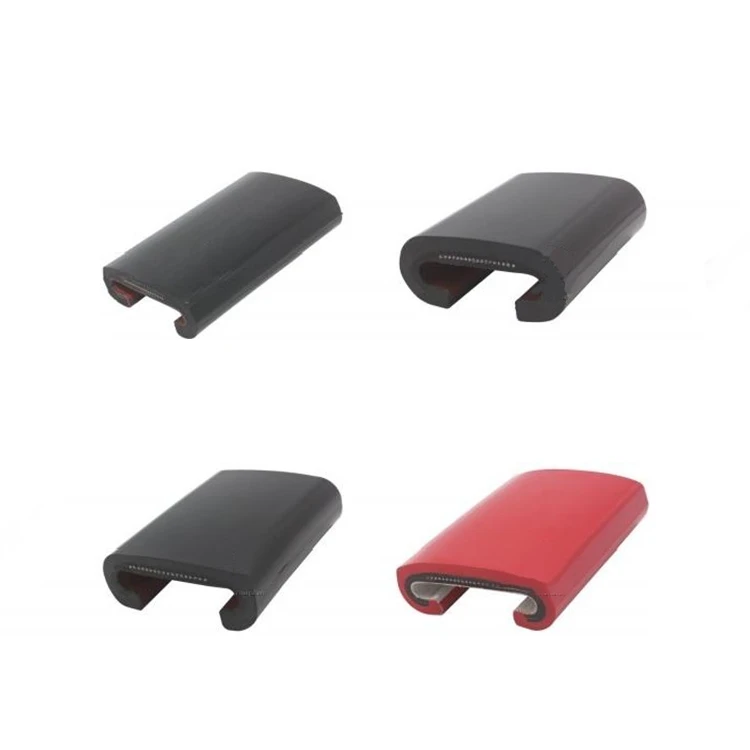
Factors Affecting Hand Rail Movement
While the general rule is that the escalator hand rail moves in the same direction as the steps, there are some factors that can affect its movement. One of the most common factors is the type of escalator drive system. Different drive systems may have slightly different mechanisms for driving the hand rail, which can result in minor variations in the speed or direction of movement.
Another factor that can affect hand rail movement is the condition of the hand rail itself. Over time, the hand rail may become worn or damaged, which can cause it to slip or move unevenly. This can be due to factors such as excessive use, improper maintenance, or environmental conditions. Regular inspection and maintenance of the hand rail are essential to ensure that it moves smoothly and consistently in the correct direction.
In addition, external factors such as temperature and humidity can also affect the movement of the hand rail. Extreme temperatures or high humidity levels can cause the hand rail to expand or contract, which can affect its tension and movement. Escalator manufacturers and suppliers take these factors into account when designing and installing the hand rail to ensure that it can operate effectively in a variety of environmental conditions.
Ensuring Proper Hand Rail Movement
As a supplier of Escalator Hand Rail, we understand the importance of ensuring proper hand rail movement. That's why we offer a wide range of high-quality hand rails that are designed to meet the specific needs of our customers. Our hand rails are made from durable materials that are resistant to wear and tear, and they are designed to move smoothly and consistently in the correct direction.
In addition to providing high-quality hand rails, we also offer installation and maintenance services to ensure that our customers' escalators are operating safely and efficiently. Our team of experienced technicians has the knowledge and expertise to install and maintain escalator hand rails to the highest standards, and we use the latest tools and techniques to ensure that the hand rail moves smoothly and consistently in the correct direction.
We also provide training and support to our customers to help them understand how to properly maintain and operate their escalators. This includes providing information on the importance of regular inspection and maintenance, as well as tips on how to identify and address any issues that may arise with the hand rail or other components of the escalator.
Conclusion
In conclusion, escalator hand rails do have a specific direction of movement, which is typically the same as the direction of the steps. This specific direction of movement is essential for passenger safety, user-friendliness, and the overall efficiency of the escalator. While there are some factors that can affect the movement of the hand rail, proper design, installation, and maintenance can help to ensure that it moves smoothly and consistently in the correct direction.
As a supplier of Escalator Hand Rail, we are committed to providing our customers with high-quality hand rails and comprehensive support services to ensure that their escalators are operating safely and efficiently. If you have any questions or need more information about our products or services, please don't hesitate to contact us. We look forward to working with you to meet your escalator hand rail needs.
References
- "Escalator Handbook" by John F. Schindler
- "Handbook of Elevators" by Joseph J. Gagne
- Industry standards and guidelines from organizations such as the American Society of Mechanical Engineers (ASME) and the International Organization for Standardization (ISO)