

Hey there! I'm in the escalator handrail supply business, and one question I get asked a lot is, "How does an escalator handrail synchronize with the steps?" It's a super interesting topic, and I'm stoked to break it down for you.
First off, let's talk about why synchronization is so important. When you're riding an escalator, you expect the handrail to move at the same speed as the steps. This is crucial for your safety and comfort. If the handrail moves too fast or too slow compared to the steps, it can throw you off balance and potentially cause an accident. So, making sure they're in sync is a top priority.
So, how does it all work? Well, at the heart of an escalator system, there's a motor. This motor is like the powerhouse that drives the whole thing. It powers both the steps and the handrail. But just having a single motor isn't enough to ensure synchronization. There are several components and mechanisms involved.
One of the key parts is the drive system. The drive system is responsible for transferring the power from the motor to the steps and the handrail. For the steps, there's a chain that's connected to the motor. As the motor turns, it moves the chain, which in turn moves the steps in a continuous loop.
Now, for the handrail, it's a bit more complex. The handrail is driven by a series of rollers. These rollers are connected to the same drive system as the steps. The drive system makes the rollers turn, and as the rollers turn, they grip the handrail and move it along.
To make sure the handrail moves at the same speed as the steps, there are sensors in place. These sensors constantly monitor the speed of both the steps and the handrail. If there's any difference in speed, the sensors send a signal to the control system. The control system then adjusts the speed of the handrail to match that of the steps.
Let's take a closer look at the sensors. There are different types of sensors used in escalators. One common type is the encoder. An encoder is a device that measures the rotation of a shaft. In an escalator, encoders are used to measure the rotation of the drive shaft for the steps and the handrail. By comparing the readings from the two encoders, the control system can determine if there's a speed difference.
Another type of sensor is the proximity sensor. Proximity sensors can detect the presence or absence of an object. In an escalator, they can be used to detect if the handrail is moving properly. If the handrail stops or slows down unexpectedly, the proximity sensor will send a signal to the control system, which can then take appropriate action.
The control system is like the brain of the escalator. It receives the signals from the sensors and makes the necessary adjustments. It can increase or decrease the speed of the handrail motor to keep it in sync with the steps. The control system also has safety features built in. For example, if there's a major malfunction and the handrail can't be synchronized, the control system will stop the escalator to prevent any accidents.
Now, let's talk about the materials and construction of the handrail. At [Supplier Role], we know that the quality of the handrail is crucial for proper synchronization. The handrail needs to be made of a material that has good friction with the rollers. This ensures that the rollers can grip the handrail effectively and move it smoothly.
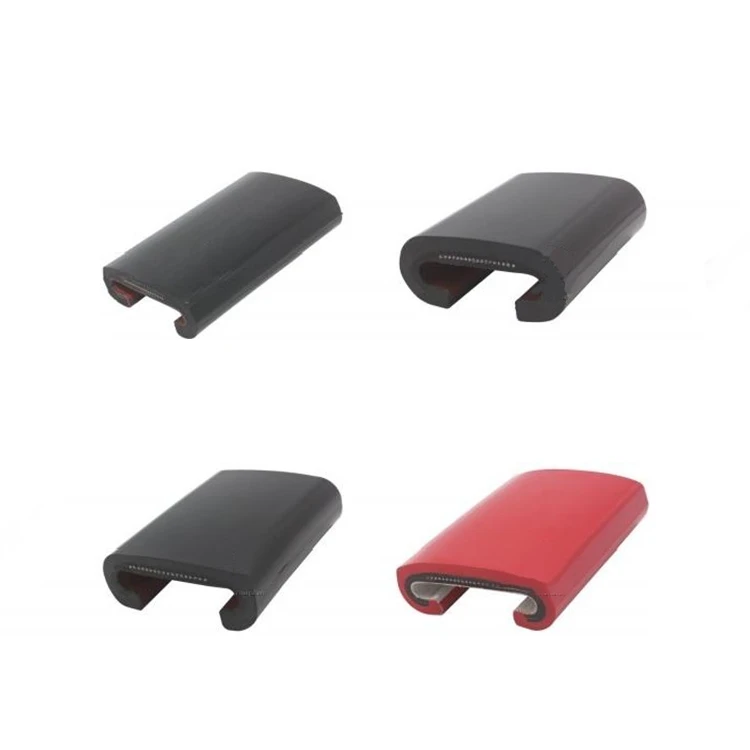
We use high - quality rubber and other synthetic materials in our Escalator Hand Rail. These materials are not only durable but also have the right amount of friction. The handrail also has a special design to make sure it fits properly on the rollers. It has a smooth surface on the outside for your comfort and a grooved or textured surface on the inside to improve the grip with the rollers.
In addition to the materials, the installation of the handrail is also very important. If the handrail is not installed correctly, it can cause problems with synchronization. During installation, we make sure that the handrail is properly tensioned. If the handrail is too loose, it may slip on the rollers and not move at the right speed. If it's too tight, it can put extra stress on the drive system and also cause synchronization issues.
We also pay close attention to the alignment of the handrail. It needs to be aligned perfectly with the rollers and the path of the steps. Any misalignment can lead to uneven movement and speed differences.
Maintenance is another key factor in keeping the handrail synchronized with the steps. Regular maintenance helps to ensure that all the components are working properly. We recommend cleaning the handrail regularly to remove any dirt or debris that could affect the friction between the handrail and the rollers.
The rollers also need to be inspected and lubricated regularly. Over time, the rollers can wear out, and if they're not in good condition, they may not grip the handrail properly. The sensors and the control system also need to be checked to make sure they're functioning correctly.
In conclusion, synchronizing an escalator handrail with the steps is a complex process that involves multiple components and mechanisms. From the drive system and sensors to the materials, installation, and maintenance, every aspect plays a crucial role. At [Supplier Role], we're committed to providing high - quality escalator handrails that are designed to synchronize perfectly with the steps.
If you're in the market for escalator handrails or have any questions about how they work, don't hesitate to reach out. We're here to help you make the right choice for your escalator needs. Whether you're a building owner, a facility manager, or an escalator installer, we can provide you with the best products and support.
References
- "Escalator Technology Handbook" - A comprehensive guide on escalator design and operation.
- Industry research papers on escalator safety and synchronization.